




Zinc Alloy vs Brass Challenge Coins | Material Guide
Zinc alloy vs brass challenge coins is the first material decision on every coin order, and it changes both price and feel by up to 60%. Zinc alloy (Zamak 3) is the industry standard — castable into 3D relief, cheap to tool, and plateable in gold, silver, antique finishes. Solid brass costs more but delivers the weight, ring and luster that serious collectors associate with military-grade coins.
Material Properties That Matter
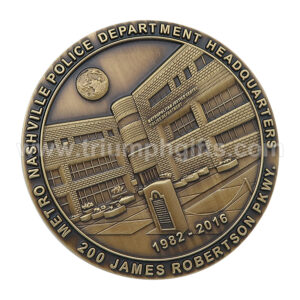
Zinc alloy melts at ~380°C, which allows die casting: molten metal injected into a mold reproduces sculpted 3D designs with undercuts and layered relief. Density is ~6.6 g/cm³. Weakness: cast zinc can develop porosity, and if plating is scratched through, the base metal can oxidize.
Brass (CuZn37) is denser at ~8.4 g/cm³ — a 1.75 inch brass coin weighs noticeably heavier in hand. It cannot be cast into deep 3D the way zinc can, but it strikes and machines beautifully, polishes to a mirror, and will not corrode under damaged plating. This is why real military units spec brass or bronze.
Price Comparison at Real Order Quantities
- 1.75″ zinc alloy, 100 pcs — $2.10–$2.90 per coin, tooling ~$80
- 1.75″ brass, 100 pcs — $3.40–$4.80 per coin, tooling ~$120
- 1.75″ zinc alloy, 500 pcs — $1.05–$1.45 per coin
- 1.75″ brass, 500 pcs — $1.90–$2.60 per coin
- 2″ zinc alloy, 1,000 pcs — $0.85–$1.15 per coin
Full pricing logic including plating and edge options is in the challenge coins pricing guide.
How to Choose in 30 Seconds
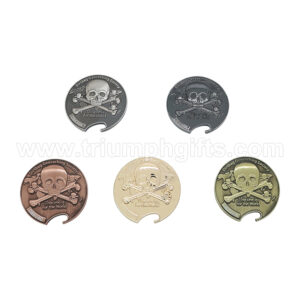
Choose zinc alloy if: your design has 3D sculpting, your budget is under $3/coin at small quantity, or the coins are for events, promotions and fundraising. Choose brass if: the coin honors military/police/fire service, it goes to collectors who will weigh it in hand, or you need deep antique finishes that look richer on brass. Mid-volume corporate buyers often split: zinc for the giveaway run, a 50-piece brass “commander edition”.
Finishes Behave Differently Too
Antique gold/bronze plating reads deeper on brass because the base tone is warm. Mirror polish is easier on brass. Hard enamel and soft enamel fill both materials equally well — the filling process is material-agnostic, as explained in our enamel process comparison.
Frequently Asked Questions
Do zinc coins tarnish over time?
Intact plating protects them for decades; scratched zinc can oxidize. Brass is inherently corrosion-resistant.
Can you tell the material by weight?
Yes — a 1.75″ 3mm brass coin weighs ~28g vs ~22g in zinc. Collectors notice immediately.
Is brass worth it for 1,000+ pcs?
Usually no; at volume the price gap widens and zinc quality is excellent. Brass pays off at collector-tier quantities.
Same tooling for both?
No — casting dies and striking dies are different tools. Material change after tooling starts means new tooling.
Get a firm quote in 24 hours. Send your artwork or idea and our engineering team will reply with pricing, MOQ and lead time. Request a quote.